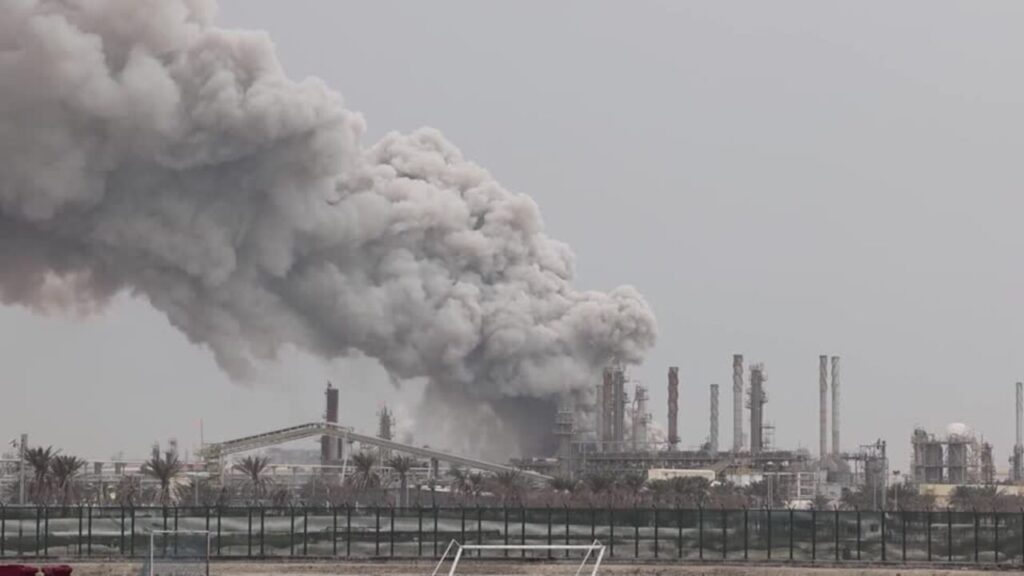
 Smoke rises from Bahrain oil refinery after attack
An American-operated Patriot air defense missile likely caused a pre-dawn explosion in Bahrain. The blast injured dozens of civilians and damaged homes, according to researchers examined by Reuters.
The explosion occurred ten days into the war with Iran. Both Bahrain and the United States had blamed an Iranian drone for the March 9 blast, which reportedly injured 32 people, including children.
US Central Command initially stated that an Iranian drone struck a residential area in Bahrain. However, Bahraini officials acknowledged on Saturday that a Patriot missile had also been involved in the Mahazza neighborhood explosion on Sitra Island.
Bahrain Confirms Missile Interception
A Bahraini government spokesperson said the missile intercepted an Iranian drone mid-air, saving lives. The spokesperson emphasized that the injuries and damage were not caused by a direct impact from the missile or drone.


Neither the Bahraini government nor Washington has shared proof that an Iranian drone was present during the incident. The use of advanced missiles to counter cheap drones is common in the ongoing war. This incident shows the risks of relying on such weapons, as the missile blast caused widespread damage and casualties.
US and Bahraini Forces in the Region
The US operates Patriot batteries in Bahrain, which is home to the US Navy’s Fifth Fleet. The blast occurred the same night as an Iranian attack on the Sitra oil refinery. Videos show smoke rising from the facility early on March 9.
Pentagon officials referred Reuters to Central Command, which did not provide immediate answers. A senior US official told Reuters that the United States is “crushing” Iran’s drone and missile capabilities and will protect its allies. The official emphasized that the US does not target civilians.
Evidence and Analysis
Researchers Sam Lair, Michael Duitsman, and Professor Jeffrey Lewis of the Middlebury Institute analyzed the incident using open-source visuals and satellite imagery. They concluded the missile likely came from a US Patriot battery about 7 kilometers southwest of Mahazza.
The analysis included videos showing the missile flying across the night sky and detonating mid-air. A digital forensics expert confirmed the video appeared authentic. Additional satellite imagery and geolocation verified the missile’s trajectory.
Damage and Casualties
Videos and images show homes damaged along four streets in Mahazza. Shrapnel tore through walls, and residents were injured. Audio experts confirmed that the explosion occurred over four miles away from the camera, matching the missile’s mid-air detonation.
The analysis noted that the missile may have been aimed at a low-flying drone, but the damage suggests it could have exploded without hitting any target. The blast scattered missile fragments up to 120 meters, hitting nearby homes.
Strategic and Regional Importance
Bahrain plays a vital role in Gulf security, especially the Strait of Hormuz. Disruptions in this chokepoint affect a fifth of the world’s oil supply. Patriot batteries are used to protect key naval sites and the oil infrastructure in the region.
The Mahazza incident shows the dangers of using high-cost missiles against cheaper drone threats. While the missile may have prevented an attack, the explosion caused significant civilian harm. Similar incidents in the past, including a 2007 Patriot misfire in Qatar, have occurred but remain rare.
Conflicting Narratives
Bahrain claimed the missile successfully intercepted a drone. Analysts, however, said it is unlikely the missile made direct contact. US Central Command called reports suggesting a Patriot failure a “LIE” on social media.
The researchers could not confirm drone fragments or missile remains visually. Witnesses were reluctant to speak due to fear of reprisals, and Human Rights Watch has documented arrests for posting attack videos online.
Lessons and Risks
The analysis highlights the limitations of missile defense systems. Patriots are sometimes fired in pairs, and the second missile in Mahazza followed a low and unusual trajectory. It is unclear whether this deviation was intentional or a malfunction.
Overall, the Mahazza blast demonstrates the hazards of deploying advanced interceptors in residential areas. While they protect strategic assets, these systems can unintentionally endanger civilians and property.
Source : dmtn1.com